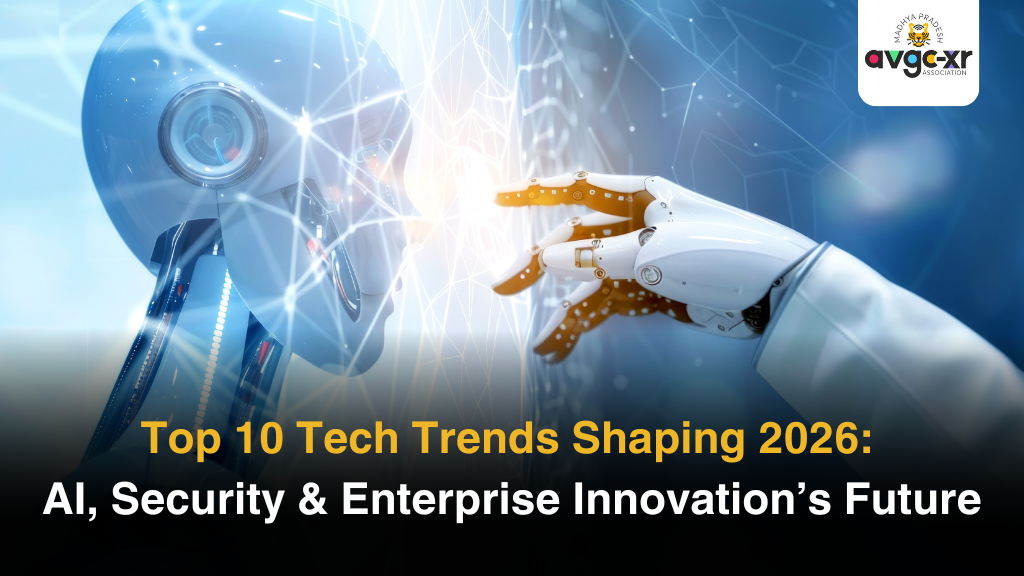
Top 10 Tech Trends for 2026
Artificial Intelligence has officially moved from being a futuristic idea to an everyday reality, and 2026 will be the year it becomes central to how businesses operate.
Here, you’ll find the list of the Top 10 Strategic Technology Trends that will shape the next few years. These trends highlight one key idea: AI isn’t just about innovation anymore; it’s about building resilience, trust, and smarter systems.
Gartner has grouped these 10 emerging technologies into three broad categories: Architect, Synthesist, and Sentinel, each representing a different side of digital change.
The Architect: Laying the Groundwork for an AI-Ready Future
The first set of trends focuses on the foundation: creating the systems and infrastructure that make AI scalable, secure, and efficient.
1. AI-Native Development Platforms
Software development is changing rapidly. Studies found that by 2028, nearly 80% of enterprise software development will be assisted by AI, compared to just 10% in 2023.
Platforms like Microsoft Copilot Studio and Google’s Vertex AI Agent Builder are helping developers move from traditional coding to AI-assisted “prompt engineering,” making development faster and more intuitive.
2. AI Supercomputing Platforms
Behind every large AI model is immense computing power. AI supercomputing platforms, built using advanced chips and GPUs, are becoming essential for model training and analytics.
Companies like AWS, Azure, and Google Cloud are already expanding their AI-optimized clusters, though managing costs and ethical governance remain top priorities.
3. Confidential Computing
As organizations use more sensitive data for AI, Confidential Computing is becoming crucial. It keeps data encrypted even while being processed, ensuring privacy in cloud environments.
Studies expect more than 60% of large companies to use this approach by 2027, a sharp rise from just 5% in 2025.
The Synthesist: Turning AI into Real-World Impact
Once the foundation is in place, businesses are now focusing on how to make AI useful in everyday operations: combining systems, models, and intelligent agents to solve real problems.
4. Multiagent Systems
Think of this as teams of AIs working together. Instead of relying on one large model, businesses are using multiple smaller agents that collaborate or compete to get complex work done.
This setup is being tested in logistics, automation, and enterprise operations using frameworks like LangChain and AutoGen.
5. Domain-Specific Language Models
These are AI models trained for specific industries: healthcare, finance, law, and more. They understand domain language and rules better than general-purpose models.
Examples include Google’s MedPaLM 2 (for healthcare) and BloombergGPT (for finance). By being more precise and compliant, these models are helping organizations build trust in AI-powered decision-making.
6. Physical AI
AI is no longer just digital; it’s moving into the physical world.
Robots, drones, and autonomous systems that use AI to see, move, and act are driving a new wave of innovation in industries like manufacturing and agriculture. IDC estimates this “Physical AI” market could cross $300 billion by 2030.
The Sentinel: Building Trust and Security in the AI Era
As AI becomes deeply embedded in business operations, ensuring safety, trust, and compliance has become a top concern for leaders. The Sentinel trends focus on exactly that, governance and protection.
7. Preemptive Cybersecurity
Cybersecurity is evolving from reacting to attacks to preventing them before they happen. AI-driven tools now analyze behavior patterns and predict threats in real time.
There’s a growing shift towards autonomous cyber defense systems that can adapt faster than human teams.
8. Digital Provenance
AI is no longer just digital; it’s moving into the physical world.
Robots, drones, and autonomous systems that use AI to see, move, and act are driving a new wave of innovation in industries like manufacturing and agriculture. IDC estimates this “Physical AI” market could cross $300 billion by 2030.
9. AI Security Platforms
Organizations are turning to unified security systems that protect all their AI models and integrations from data leaks or misuse.
Research predicts that by 2027, over 40% of enterprises will rely on such AI-specific security tools.
10. Geopatriation
Data localization is gaining importance as countries tighten data protection laws.
Many organizations are now moving workloads to regional or sovereign cloud providers to comply with local regulations and reduce geopolitical risks. Big cloud providers like Microsoft and AWS are already building these “sovereign clouds.”
Why These Trends Matter
Together, these 10 trends signal a major shift in how organizations approach technology. The focus is no longer just on adopting AI; it’s about integrating it responsibly, balancing speed with security, and aligning it with long-term goals.
For business and government leaders, the following framework offers a simple roadmap:
- The Architect builds the right infrastructure.
- The Synthesist connects innovation to outcomes.
- The Sentinel ensures everything stays secure and trusted.
As 2026 approaches, these ideas will guide how enterprises and even public institutions design, govern, and sustain the next era of intelligent systems.